


As the title of this article might suggest it is a story of “Hoofs and Feathers”, a story of a person who is both a pigeon fancier and a full-time trainer of many Group 1 thoroughbred racehorses.
Gary Portelli is both a well-known pigeon fancier and horse trainer. As a pigeon fancier more so in Sydney where he is a member of the Liverpool Pigeon Club associated with the Central Cumberland Federation. As a Group 1 horse trainer he is more widely known throughout the horse racing industry Australia wide.
Currently he has around 50 horses in training at his Warwick Farm Stables that are adjacent to the Warwick Farm Racecourse in Sydney where his pigeon lofts are also located. Gary attends many of the yearling auction sales, purchasing those he believes have the future potential to be champions. Some of these purchases range in price from as little as $20,000 with many ranging from $70,000 to $200,000 plus.

Once broken in many of these yearlings are advertised for sale, either to individuals with many being available to buy shares in, and as a result many syndicates of small-time enthusiasts have been formed with all syndicate members hoping to be in the “winners circle” come race day.
Although I have known Gary for many years, I had never visited his stables or lofts until recently. For several years now Gary has conducted an “Open Day” at his stables during the first week in May where current and prospective buyers can come and view the horses listed for sale. Seeing I had never been before I thought it may be a good experience and while there to also visit his lofts and take a few photos for this article.

Before talking about Gary’s pigeons and his pigeon racing methods and successes I thought I would just outline three of Gary’s greatest horse racing achievements as a Group 1 trainer.
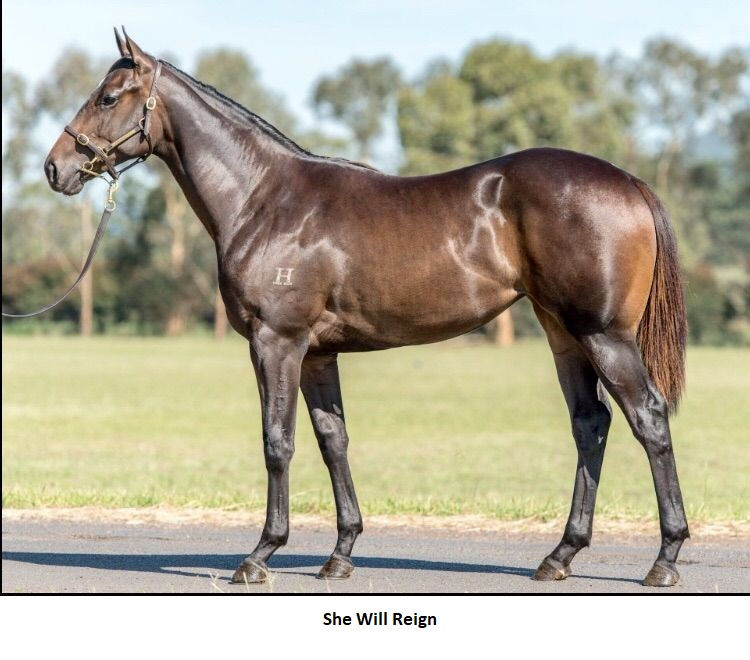
The first being the trainer of a horse named “Rebel Dane”, a champion racing stallion that has gone on to sire several top racehorses. This horse was one of Gary’s early champions during the period 2013 to 2017 that won over $2,300.000 in Group 1 racing. Another was “She Will Reign” that in 2017 won 1st Prize in the “Golden Slipper” race for 2 year olds that at the time had a prize pool of $3.5 million, and again in 2022 he once more trained the winner of the “Golden Slipper” with a horse named “Fire Burn” with a prize pool of $5 million. As mentioned this is a race for 2year old horses and regarded as a “sprint race” as the distance the race is run over is 1200 metres. It is regarded as one of the world’s richest races for its age group.

Now on to Gary Portelli the pigeon fancier, as I said I have known Gary for several years, having been in his company on many occasions that have included club events, presentations and pigeon seminars/conventions.

As Gary is very busy with his racehorses, having to attend track work, Liaison with owners and attending race meeting, many that take him away to various racetracks making it difficult to arrange a time to sit down and interview him face to face. So as to work in with him I arranged to email him a list of questions so that he could answer and return them to me as and when he had the time, so following are his responses.
As with many interviews I have always been interested in how and when fanciers that I have interviewed started off with pigeon and as with many Gary was no exception it began when he was only a young lad of around 9yrs of age. He went on to say that where he lived at the time there were many feral pigeons living in a next-door neighbor’s barn and he used to watch them and was fascinated with their antics. A few years later another nearby neighbor had racing pigeons and he directed Gary to the local pigeon club where he was gifted a few pair of pigeons with Gary saying that this was the start of his love of racing pigeons. Since then Gary said he has had pigeons on and off for 47 years.
When asked about how long he has raced pigeons from his present address he said for the past 15 years, saying that his loft is located within his Warwick Farm horse complex which has been handy as he is there more often than enough, and can fit the pigeon’s in-between his horse training demands.
I preceded to ask if he has raced in other clubs/federations other than the Liverpool Club and the CCF where he is currently a member to which he answered that originally he was a member of the Orange Pigeon Club that is a country city situated 200km from Sydney in the central west of NSW. From there relocating to the Sydney region where he first flew with the Macquarie Towns Club an outer western Sydney suburb, with his last move being to his present club location.
With regards to what family/bloodlines of birds he currently keeps, Gary replied that he has had most success with Staff van Reet X Gabby Vandenabeele and that these would make up the majority of his 20 breeding pairs. Gary going on to say that just as important in the racehorse industry is the breeding/pedigree, and that good pigeons are just the same. Genetics are crucial in the selection process, going on to say that there is never a guarantee, but you need to start somewhere and there is no better starting point. As a point of interest “Rebel Dane” was the sire of Gary’s first Golden Slipper winner “She Will Reign”. Winner's breeding winners as they say.
From these 20 pair of stock birds Gary said that he breeds around 100 youngsters each year and try’s to have at least 20 two and three olds from the previous year to complement the young bird team. When asked does he separate the hens and cocks when racing he replied that due to being very busy with his commitments to managing his race horse business he has no option but to race his pigeons, hens and cocks together and that this stage has been happy with the results, although towards the end of the race season, when the weather begins to warm up the cock birds can start to be a bit of a problem.
When asked to describe his lofts, Gary said that he has two lofts, a stock loft that is separate to his race loft with both lofts being 12metres long and 3 meters wide, both have open fronts with the race loft having an open-door trapping system complete with electronic timing. The race loft has four sections, each with box type perches along the back and side walls.

I asked Gary to outline how he trains and prepares his race birds for racing, to which he said that he works his birds around the loft for 1 hour each day and begins tossing 6 weeks prior to the first race starting with 4 tosses from 2km then jumping them to 10km until he is happy with the way they clear for home. After this they have 5 tosses at 20km then a toss at 50km before they have one toss with the federation from the first race point. When asked does he have a preference to race hens or cocks he said no as their feeding and training are the same and that while the hens are more consistent, he has had some good results with the cocks.
Many fanciers that I have spoken with over the years say that where possible they like to mix their own blend of grains to feed their birds, and on asking Gary what his preference was he said that for convenience he prefers a commercial mix as long as it is from a reputable produce merchant, although he did say that he likes to add additional corn to the mix when the weather is cold mainly in the evening feed, and in both the morning and evening towards the end of the season as the distance increases. Again, as per racehorses what is fed, when it is fed is important depending on travel time to the race point, the number of nights in the basket, distant to be flown and predicated weather forecast.
Gary said that he is a big believer in good quality additives such as Pick Stones, Pink Mineral Powder and Grit and are made available at all times. With regards to medications Gary said that unfortunately he is surrounded by feral pigeons as his loft is close to Warwick Farm Railway Station and many ferals visit the stables all day, and at times when the loft door is open they find their way in, therefore I am frequently taking pigeons to the vet for a check-up and treatments are a regular occurrence.
I asked Gary could he list his major achievements in pigeon racing and the ones he thought were his best included winning the SRPF’s Fed National, winning the Liverpool Classic Race, the Liverpool YBD and the clubs AAD in 2024 running 13th in the CCF and could have won with his first 3 birds, another good win was when he won 1st Fed from 140km with over 4500 birds competing.
Most fanciers have a memorable racing experience they will always remember, and when I asked Gary did he have one his reply was; “Some years ago I won a race from Geelong in Victoria, around 600km with a 3yr old hen that was never in the clock before, she was on the wing for 10 hrs. and was the only bird home in the Liverpool Club on the day”.
When asked what criteria he uses when selecting a bird for stock Gary said that that he loves a bird with bright healthy eye, an open throat with a distinctive curtain and wide gullet. They have to be apple bodied with a “snapping wing” and plenty of feather on the under carriage with a tail feather that is only one feather wide and a strong back. Gary said that he loves putting winners that have these attributes to stock.
When asked what he would like to see done to promote the sport and its image he replied that in his capacity as a Group 1 race horse trainer he is often being interviewed on sports radio programs and TV and uses these avenues as much as possible with many commentators and listeners/viewers knowing of Gary’s passion for racing pigeons.
Although the title of this article is “Thoroughbreds of the Sky and Turf”, hoofs and feathers so to speak, and that this magazine, “The Racing Pigeon Pictorial” generally speaking is to do mainly with pigeons I thought it interesting to tie the two together, especially as a pigeon fancier is also heavily involved in the racing of another animal, both of which have been in the service of man in one way or another more so than any other animal albeit during times of conflict as well as in times of peace, providing much pleasure and enjoyment to thousands of people in many countries all around the world.
Finally Gary said that he cannot thank his father Joe enough for all the hard work and assistance he gives with the pigeons, as Gary said earlier he is often away some times for days with his horse racing responsibilities, saying that he and his father having been doing the “pigeon thing” together for quite a long time.
A quote to finish with comes from one of my Favorite “motivators”; the late Sir Winston Churchill, who once said:
“A pessimist sees difficulty in every opportunity; an optimist sees opportunity in every difficulty”.
Paul Gibbs